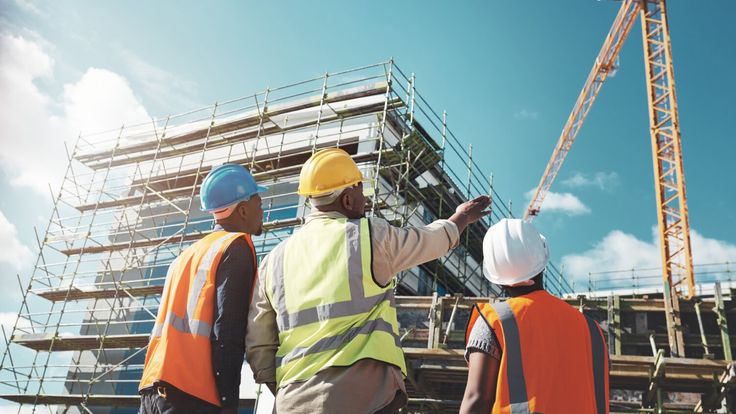
The construction industry is evolving rapidly, and structural steel continues to play an important role in modern infrastructure. From industrial facilities and commercial buildings to warehouses and complex structural projects, steel offers the strength, flexibility, and durability required for demanding construction applications.
In 2026, structural steel fabrication is moving beyond traditional cutting, welding, and assembly. Advancements in digital engineering, automation, Building Information Modeling (BIM), precision manufacturing, and quality control are changing how steel structures are designed, fabricated, and delivered.
For a modern metal manufacturing company, keeping up with these developments is no longer simply about adopting new machinery. It is about creating a more accurate, efficient, and integrated fabrication process from engineering and detailing through fabrication and project execution.
1. BIM-Driven Steel Fabrication
Building Information Modeling (BIM) is becoming increasingly important in structural steel projects. Instead of relying solely on conventional drawings, fabrication teams can work with detailed digital models that provide a clearer understanding of the complete structure.
BIM helps identify clashes and coordination issues before fabrication begins. This can reduce modifications at the fabrication or construction stage and improve communication between engineers, fabricators, contractors, and other project stakeholders.
For structural steel fabrication companies, BIM also creates a more connected workflow between design, detailing, fabrication, and installation.
2. Greater Precision Through Automation
Precision is one of the biggest priorities in modern steel fabrication.
Advanced CNC cutting, drilling, profiling, and automated fabrication equipment allows manufacturers to produce components with greater consistency and accuracy. Digital fabrication workflows can also reduce manual errors and improve repeatability across large projects.
This level of precision is particularly valuable for projects involving complex connections, large structural members, and tight installation tolerances.
3. Faster Project Delivery
Construction schedules are becoming increasingly demanding. Delays in fabrication can affect transportation, erection, and the overall completion of a project.
Modern fabrication processes are therefore focused on improving production efficiency without compromising quality. Better planning, digital detailing, automated machinery, organized material handling, and coordinated project execution can help reduce unnecessary delays.
A well-integrated fabrication process allows steel components to reach the construction site ready for installation, supporting faster and more predictable project progress.
4. Quality Control at Every Stage
Quality control is becoming an increasingly important part of structural steel fabrication.
Modern projects require consistent inspection and documentation throughout the fabrication process. Material verification, dimensional inspection, welding quality, surface preparation, and final checks all contribute to the reliability of the finished structure.
Rather than treating quality control as a final-stage inspection, leading fabrication operations are integrating quality checks throughout engineering, production, assembly, and finishing.
5. Sustainable Steel Fabrication
Sustainability is also influencing the future of steel construction.
Steel can be recycled and reused, making it an important material for more sustainable construction practices. At the fabrication level, better nesting and cutting strategies can help reduce material waste, while efficient production processes can reduce unnecessary resource consumption.
For a modern metal manufacturing company, sustainability is increasingly connected with efficiency: using materials intelligently, minimizing waste, and optimizing production.
6. Digital Project Coordination
Structural steel projects involve multiple stages and stakeholders. Engineers, detailers, fabricators, quality teams, contractors, and site teams must work together to keep a project moving efficiently.
Digital project management and communication tools are making it easier to share drawings, fabrication information, revisions, inspection records, and project updates.
This improved coordination can help reduce communication gaps and ensure that changes are properly managed throughout the project lifecycle.
7. Advanced Fabrication for Complex Structures
Modern architecture and industrial development are creating increasingly complex structural requirements. Steel fabrication needs to accommodate unusual geometries, larger spans, customized connections, and demanding structural configurations.
Advanced engineering and fabrication capabilities allow steel components to be developed for projects where conventional fabrication approaches may not be sufficient.
This makes precision engineering and experienced fabrication teams essential for delivering complex structural solutions.
8. End-to-End Project Execution
One of the most important trends in structural steel fabrication is the move toward integrated project delivery.
Instead of treating engineering, detailing, fabrication, quality control, and site execution as completely separate activities, modern fabrication companies are increasingly connecting these stages into one coordinated workflow.
An end-to-end approach can improve accountability, communication, quality, and project visibility while reducing the risk of errors between different stages.
What Does the Future Hold for Structural Steel Fabrication?
The future of structural steel fabrication will be shaped by a combination of technology, precision, automation, sustainability, and better project coordination.
BIM and digital engineering will continue to improve project planning. Automation will increase fabrication accuracy and production efficiency. Advanced quality-control systems will support greater consistency, while sustainable practices will become increasingly important across the construction industry.
However, technology alone cannot deliver successful projects. Skilled engineers, experienced fabrication teams, proper quality management, and effective project coordination will continue to be essential.
Conclusion
Structural steel fabrication in 2026 is becoming more precise, connected, and technology-driven. The industry is moving toward integrated workflows where engineering, digital modeling, fabrication, quality control, and project execution work together to deliver better results.
For companies operating in structural steel fabrication and metal manufacturing, adapting to these trends can help improve efficiency, reduce errors, control material waste, and meet the increasingly demanding requirements of modern construction.
At Triad Engineering, a focus on precision structural steel fabrication, engineering, quality, and end-to-end project handling provides a foundation for delivering reliable steel solutions for today’s evolving construction industry.